Augmented Reality (AR) - explained simply
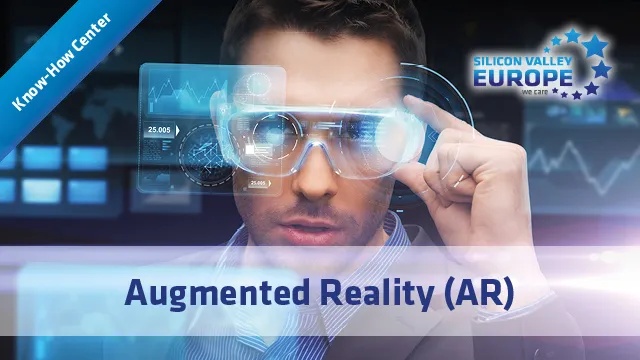
1. Definition: What is Augmented Reality (AR)?
**Augmented Reality (AR)** is a technology that integrates digital information and virtual elements into the real world to enhance the user experience. Unlike Virtual Reality (VR), which creates a fully digital environment, AR adds computer-generated content such as text, images, or 3D models in real time over the real world.
**Classification in the IT context:**
AR is a **technology** used to enhance reality through digital overlays. It is applied in various fields such as education, retail, entertainment, and industry to improve and expand interaction with the physical world.
2. Background and Origins
**Origins:**
The idea of Augmented Reality dates back to the 1960s, when computer scientist Ivan Sutherland developed the first Head-Mounted Display (HMD). The term "Augmented Reality" was first used in 1990 by Tom Caudell to describe a new technology to support assembly processes.
**Key developments and milestones:**
- **1968:** Ivan Sutherland develops the first HMD, which serves as the foundation for later AR technologies.Technological foundations:
- Cameras and sensors: Capture the real environment and enable the overlay of digital content.
- Image processing: Analyses and interprets visual data to precisely insert virtual elements into the real world.
- Positioning systems: GPS, magnetometer and accelerometer help determine the user’s exact position and the placement of AR content.
- Rendering: Generates and places digital information in the real world so that it appears seamlessly integrated.
3. Benefits of the technology
- Enhanced interaction: AR enables interactive and immersive experiences that increase user engagement.
- Increased efficiency: In industries such as manufacturing or healthcare, AR can boost productivity through real-time guidance and information.
- Education and training: AR offers innovative learning and training methods by visually presenting complex concepts and creating interactive learning environments.
- Marketing and retail: Companies can use AR to provide engaging and personalized shopping experiences.
Comparison to older technologies: AR delivers an enhanced user experience compared to traditional, non-interactive media. While classic methods often provide only static information, AR enables dynamic and context-based interaction.
4. Specific benefits for the user
Direct impact:
- Efficiency: AR can simplify everyday tasks by providing real-time information and guidance.
- Flexibility: Users can view and interact with digital content in various physical locations, opening up new possibilities for learning and entertainment.
- Creativity: AR allows users to creatively integrate virtual elements into their real environment, whether for design projects or entertainment.
Real-world examples:
- Education: AR applications such as “Google Expeditions” provide virtual field trips and interactive learning environments.
- Retail: Apps like “IKEA Place” allow users to virtually place furniture in their homes to see how they fit.
- Medicine: AR is used to assist surgeons by overlaying patient data onto the surgical field.
Industries that benefit:
- Education: Through immersive learning methods and virtual classrooms.
- Retail: With innovative shopping experiences and product visualizations.
- Healthcare: Through precise surgical assistance and training.
5. Why is it important to deal with this?
Future prospects and relevance: AR has the potential to transform numerous industries through innovative applications. The technology is becoming increasingly relevant for improving workflows, training programs, and customer experiences.
Possible developments or trends:
- Integration of AI: Enhances the contextualization and interactivity of AR applications.
- Expansion to new devices: AR technology is being integrated into new devices such as smart glasses and wearable computers.
- Improved hardware: Advances in sensor and image processing technology will further enhance the accuracy and user-friendliness of AR.
Risks of not paying attention: Companies that ignore AR technologies may miss out on opportunities to differentiate themselves in the competition and offer innovative solutions. Avoiding AR can result in companies falling behind competitors who are already leveraging this technology.
6. Further resources
- Courses: “Augmented Reality Development” on Udacity offers a comprehensive introduction to AR development.
- Books: “Augmented Reality: Principles and Practice” by Dieter Schmalstieg and Tobias Hollerer provides a detailed overview of the technology.
- Websites: The AR Association offers up-to-date information and resources on AR technologies and applications.
Recommended first steps:
- Try out AR apps: Test different AR apps on your smartphone to get a feel for the technology.
- Explore development platforms: Experiment with AR development platforms such as ARKit (Apple) or ARCore (Google) to create your own AR applications.