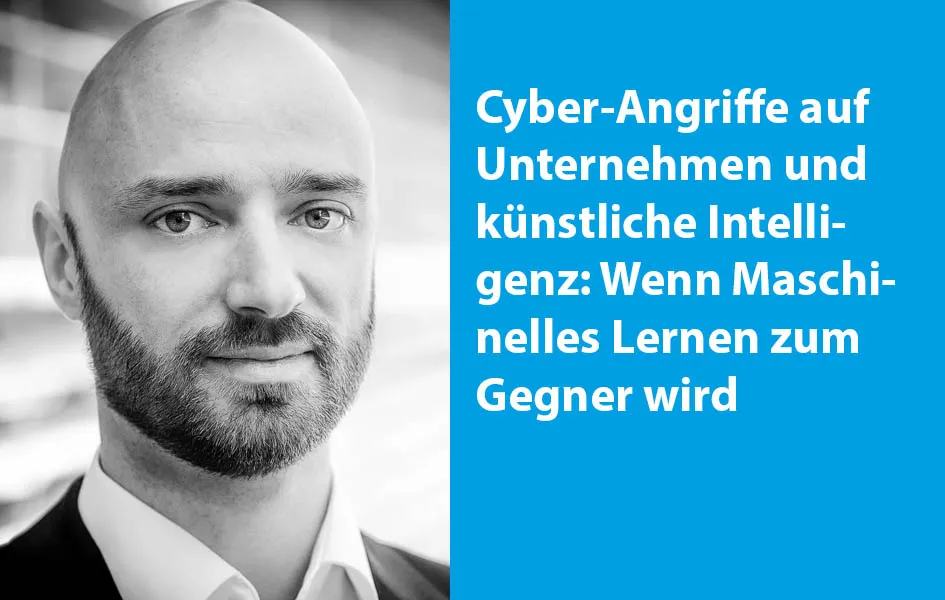
Author: Thomas Uhlemann, Security Specialist at ESET Deutschland GmbH
Digitalization and high-level data mobility
A not-to-be-underestimated aspect of advanced digitalization is the enormous mobility and decentralized structures of the working world. This, in turn, means that company data is also highly mobile. Ensuring seamless protection of data and thus corporate assets poses a major challenge. IT security concepts must address this fact. Mobile devices must be protected just as much as endpoints or servers. In general, it can be said that every data set is of interest to online criminals.
The size of the company plays no role here—rather, it is the innovative strength and thus the value of the information obtained that matters. In this context, IT security must always be understood as a process. In addition to deploying powerful and tailored technologies to protect data and IT infrastructure, employees themselves represent a not-to-be-underestimated component of the IT security concept.
AI AND MACHINE LEARNING TOPIC
Even though artificial intelligence and machine learning have been transforming various areas of human life for some time now, the end of the road is far from being reached. In the future, AI-based technologies will increasingly serve fraud prevention, better evaluate business processes in companies, optimize test procedures, and develop new solutions to existing problems. What sounds like a digital panacea for humanity and its economic cycle is, in reality, only one side of the coin. The increasing digitalization of industry, critical infrastructure, and our private world also creates new risks through the use of AI.
The dark side of IT
Companies using machine learning technologies are undoubtedly an attractive target for attackers. One conceivable scenario would be to infiltrate the system with fake data sets, manipulate it in such a way that algorithms make incorrect decisions or monitoring systems are disabled, thereby causing significant harm to the company. This so-called adversarial machine learning—where ML-based technologies are altered using falsified inputs—is a hot topic, especially in the field of cybersecurity. Artificial intelligence arouses desires, and cybercriminals also see the potential to misuse ML to their advantage. This enables them not only to create new malware or phishing campaigns and spread them much faster, but also to directly target their victims, extract valuable data, search for and exploit zero-day vulnerabilities, and protect hijacked infrastructures such as botnets.
Spammers and Emotet open Pandora’s box
That these thought experiments are no longer so far-fetched is impressively demonstrated by current spam campaigns. These use ML-based translation services to linguistically optimize the messages and send them to a wide variety of countries. The currently widespread downloader Emotet also abuses machine learning technologies to target users even more precisely. It even cleverly bypasses honeypots and botnet trackers. Emotet collects data on potential victims and sends it to the attacker’s C&C server. Based on the evaluated information, the payload for the malware is then individually “calculated.” In addition, the malware is capable of distinguishing between human operators and virtual machines, which are mainly used by researchers.
The “arms race” continues
AI and machine learning are proving to be a new, lucrative business field not only for companies but also for hackers. The race between cybersecurity and cybercriminals is therefore entering a new round with AI. Without machine learning, the operators of Emotet would currently not be able to implement such expensive and elaborate self-defense mechanisms in malware. All the more aware are we that machine learning does not only bring advantages and that the risks will increase over time. For this reason, in addition to ML-based technologies, there are a variety of highly effective detection modules such as DNA detection, advanced memory scanner, network attack protection, and UEFI scanner. Only multi-layered protection and human expertise can prevent cybersecurity from running into a void.
ESET company presentation: ESET is a European company headquartered in Bratislava, Slovakia. Since 1987, ESET has been developing award-winning security software that already helps more than 110 million users to enjoy secure technologies. The broad portfolio of security products covers all common platforms and provides companies and consumers worldwide with the perfect balance between performance and proactive protection. The company has a global distribution network in over 200 countries and offices, among others, in Jena, San Diego, Singapore, and Buenos Aires. For more information, visit www.eset.de or follow us on LinkedIn, Facebook, and Twitter.