Rethinking leadership in times of "New Work"
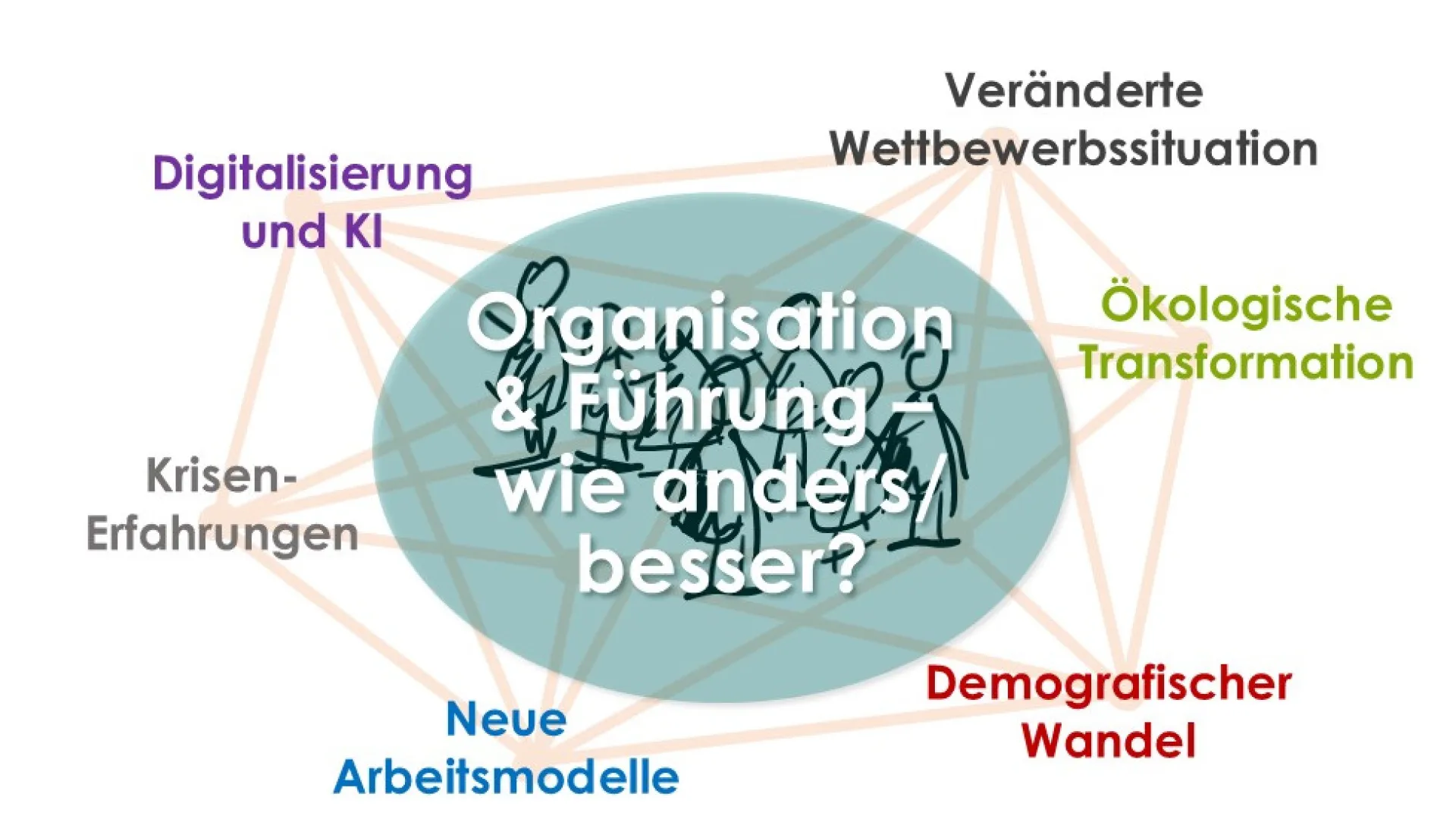
We report in the article "Leadership rethought..." in issue 06/26 of the specialist magazine "PERSONALFÜHRUNG" on a transformation we carried out at a medium-sized space designer from late 2021 to early 2026. It all began with a "WorldCafé" that we held with around 50 people to identify the essential, core values crucial for collaboration. This was followed by process optimization, the introduction of new structures with new roles (pilots and co-pilots for projects), the accompanying development of future-oriented leadership and a supporting culture with the implementation of feedback loops, new goal-setting discussions, and the decentralization of responsibility.
We believe that, as a conclusion from this transformation process—which naturally also included the simultaneous further digitalization and implementation of new project software—we can say that the “good chemistry” between the clients and the contractors was a key success factor relatively early on in the collaboration. This was not only reflected in the fact that everyone listened to each other and was open to one another, but also in the fact that, as consultants, we did not bring ready-made products or procedural recipes, but rather carefully aligned our expertise with what we heard and observed. In this way, we gradually recognized how the “customer ticks,” what pace they set or want to set, what they have already tried or never heard of, etc.
We realized that, following its strategic reorientation in 2018/19, the customer approached things with a great deal of momentum and enthusiasm and shared our passion for the matter—but we still had to slow down on occasion and demand “reflection loops” to, on the one hand, more precisely align which “New Work” aspects could or should be adopted by the customer and which would be better avoided, and, on the other hand, to ensure that all employees were on board.
We have found that it is helpful to relatively quickly—regardless of the point or topic at which the transformation begins—develop a “big picture” together that outlines what kind of change seems necessary and how this could or should be initiated by whom. At the start of the process analysis, for example, the management, together with the team leaders, quickly determined that the optimization following the analysis could not take place without the employees and customers, nor without initial ideas for the new, better-fitting structure, which we implemented under the label “new role clarification” and “on the path to greater self-organization.”
This, in turn, required measures at the technical level (new software for project tracking), the leadership level, and the cultural level (e.g., implementing feedback loops and holding large-group events). This was the most challenging phase for both sides.