In the interview with Jana Sytenki, web designer & Webflow developer with a focus on the essentials
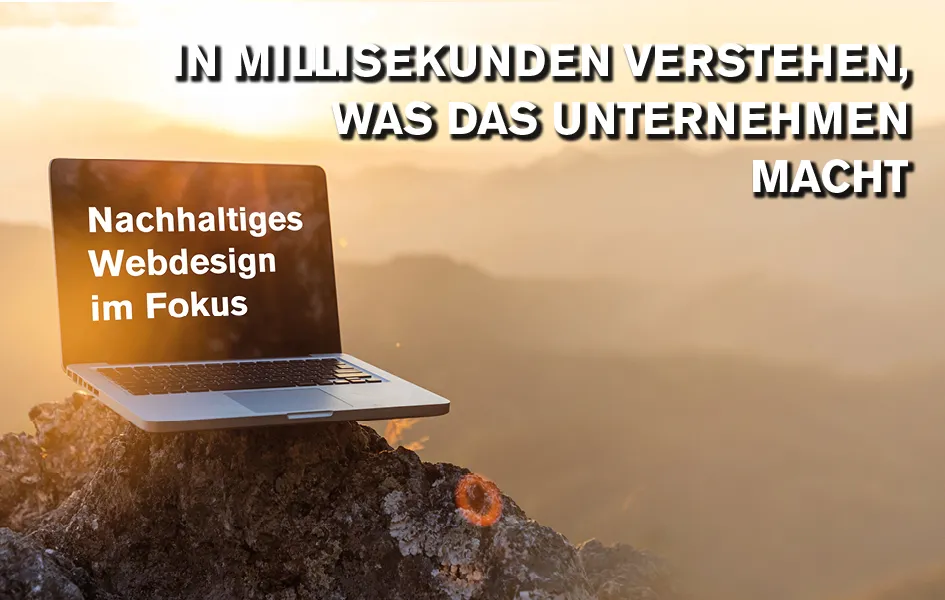
We are delighted to present an exclusive interview this time with Jana Sytenki, the newest member of Silicon Valley Europe. Jana brings a unique perspective to our community by contributing her expertise in the field of sustainable websites.
For over two years, Jana Sytenki has been deeply immersed in the world of web design and everything related to it – from Webflow and SEO to user experience. Her focus lies on creating target-group-oriented websites for SMEs that are not only visually appealing but also convert.
Her projects primarily revolve around the topic of sustainable websites. Sustainable websites are designed to operate in a resource-efficient and energy-saving manner. This includes everything from minimizing file sizes and optimizing code. Sustainability in web design not only contributes to environmental protection but also enhances the performance and user-friendliness of the website.
DIGITAL FUTUREmag: Ms. Sytenki, you have recently become a member of Silicon Valley Europe. What motivated you to join this community?
Jana Sytenki: I love corporate networks, being part of a community, and creating something together. That inspires me. We live in a world where we all too rarely come into contact with each other, and networks like this can change that.
DIGITAL FUTUREmag: You stand for sustainable websites. What does sustainability in web design mean to you, and why is it so important?
Jana Sytenki: To me, sustainable web design is not just about environmental aspects but also about a sustainable external presentation of the company. Following the motto “Do it right the first time” or “Be smart, pay once.”
DIGITAL FUTUREmag: With your expertise in Webflow, SEO, and user experience: How do you combine these elements to create an optimal website?
Jana Sytenki: Before I start with the design and implementation, I always conduct a target group and SEO analysis to ensure I am reaching the right people. Based on this analysis, I develop a meaningful strategy and structure that truly engages the target audience. Only then do I move on to design and implementation, with a particular focus on usability (as few clicks as possible) and SEO aspects. Because what use is a website if no one can find it?
To me, all three aspects are like gears turning together in a wheel, dependent on one another. If one gear doesn’t turn, everything comes to a standstill.
DIGITAL FUTUREmag: Your focus is on websites for SMEs. What are the particular challenges and needs of this target group?
Jana Sytenki: I’ve observed that the particular challenge for SMEs is truly reaching their target audience. Often, the basics (analyses) are missing, and websites are commissioned randomly to freelancers or agencies without any real strategy behind them. The main thing is that it looks good. I’ve made it my mission not just to create a beautiful website but to develop a website strategy and structure that truly captures your target audience.
DIGITAL FUTUREmag: Transparency and honesty are important to you in your collaborations. How do you implement these values in your projects?
Jana Sytenki: In projects, I always bring my clients on board and explain to them why, how, and what I'm doing. That way, they never grope in the dark and always know exactly where we stand and what's currently happening. Although my service is essentially a “Done for you” offering, I prefer the “Done with you” approach. That doesn't mean, however, that the client has to invest countless hours.
Before we start a project, I give my clients an honest assessment of what can and cannot be achieved with the website. I don't like making false promises. My top priority is to achieve the set goal and generate a return on investment, even if that means working unpaid overtime.
DIGITAL FUTUREmag: You follow a value-based pricing model. Can you explain what that means and how your clients benefit from it?
Jana Sytenki: Value-based pricing is a market-oriented pricing strategy that sets the price of a product or service based on its perceived or estimated value.
In short: The price is based on how much money I can realistically generate for you.
I like to use value-based pricing because, in my opinion, it creates a win-win situation for both sides. The customer gets a fair price that they can also recoup, and I get paid appropriately.
DIGITAL FUTUREmag: What are the most common mistakes you see on websites, and how can they be avoided?
Jana Sytenki: The most common mistake I see is a lack of structure. Often, the website looks as if it were thrown together at random, and you can't even tell what the company does.
It's extremely important that the user understands what the company does within milliseconds. Even in the upper part of the website (the hero section), it must be clear who you are, what you do, and why you do it. If these three things aren't immediately recognizable, the user will leave.
The user will also leave if the website takes longer than half a second to load, if too many pop-ups appear, or if the website looks cluttered.
Less is more!
DIGITAL FUTUREmag: How do you see the future of web design, particularly in terms of sustainability and user experience?
Jana Sytenki: Very bright, I would say. Especially with regard to Webflow, the program I work with, demand is increasing. More and more people want websites that are up to date. In the past, a website was there to provide information; today, it's much more than just a source of information. It serves to generate leads and build a connection with the target audience. Accordingly, many more companies today value a well-thought-out website with content that is convincing and also keeps up with the times.
In terms of the environment, this will probably become increasingly important. I'm already trying to make the website as environmentally friendly as possible by compressing images, keeping the code clean, and taking a minimalist approach.
DIGITAL FUTUREmag: Finally, what are your goals and visions for the future of your work in sustainable web design?
Jana Sytenki: My vision is that sustainable web design gets more attention and companies engage much more consciously with their website. My dream is that every company takes the topic of sustainability in web design seriously and thinks twice about whether to choose the cheapest freelancer or the cheapest agency, only to end up paying double – in money, energy and time.
Moreover, I want Webflow to become as well-known as WordPress. It would be great if companies and service providers recognize and utilize the potential of Webflow.
DIGITAL FUTUREmag: I think after this interview everyone will be eager to evaluate their website based on entirely new criteria. Thank you for the great conversation.