In the interview with Josef Gutsmiedl, Managing Director of P.S. Cooperation GmbH
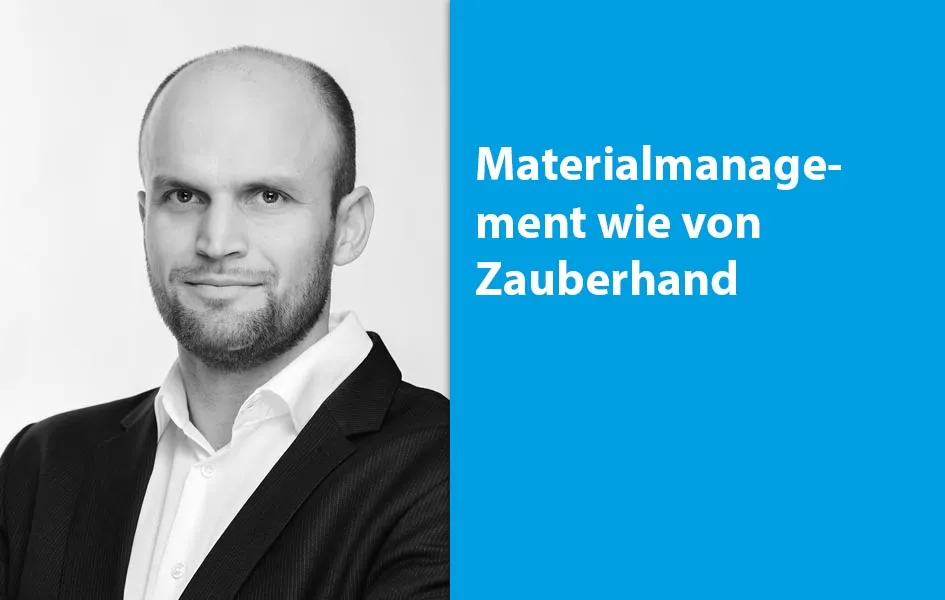
P.S. Cooperation GmbH ensures lean and efficient procurement processes for all items through smart technologies. The focus is on minimizing storage, transport, handling, and processing costs. In an interview with Josef Gutsmiedl, Managing Director of P.S. Cooperation GmbH, we discuss Kanban systems, customer centricity, lean procurement solutions, and sustainable business practices today.
DIGITAL FUTUREmag: Kanban systems have been on the market for quite some time now – what sets your system apart from all others?
Josef Gutsmiedl: Many of the systems available on the market are based on the provider's framework conditions, often referred to as full-service providers or consolidators. The processes of these full-service providers define the specific framework. Supplier and product portfolios, interface connections, shelving systems, and much more are often determined not by the customer but by the provider. With our el/ka/sy® (electronic kanban system) and el/proc/sy® (electronic procurement system), we take a different approach. The customer defines which various requirements they have from different suppliers with different product ranges, or already have. Together with the customer, we implement a lean and efficient provision of all recurring requirements through a single process – independent of suppliers. Whether they want to integrate a local manufacturer or an international wholesaler, the customer can select suppliers at any time and is not bound by rigid constraints. At the customer's request, we often also move beyond the C-parts category and examine all recurring requirements. After all, B-parts with a recurring nature are also suitable for a Kanban system. Another advantage is that, in addition to classic goods requirements, we also record goods receipts using RFID technology. This allows stock-managed items to be mapped and digitally transferred to the ERP system via goods receipt. Incidentally, this also provides a transparent key figure for the logistics performance delivered.
DIGITAL FUTUREmag: What does your solution and portfolio look like in concrete terms?
Josef Gutsmiedl: We see ourselves as a holistic system service provider. With concrete project concepts, we work with our customers to develop a joint solution tailored to the specific local conditions. With the el/ka/sy® software and hardware, we then provide the customer and supplier with the necessary digital infrastructure. As an option, we also take care of the infrastructure, such as shelving systems or container concepts. Our solution is rounded off by the option of having the logistics service performed on-site by P.S. – Logistiker – from the supermarket to the workplace. Using the el/ka/sy® RFID technology, requirements and goods receipts are recorded during ongoing operations on-site. We focus on the actual available material at the point of consumption and record the requirement precisely when the relevant material is running low on-site.
DIGITAL FUTUREmag: Do both the customer and the supplier need to work with your system, or can other systems also be integrated?
Josef Gutsmiedl: I currently find the wording “need to” misleading given the wide range of options and digital concepts available. Many companies already rely on specific solutions for their respective requirements—so-called microservices. Ultimately, the customer decides what is the optimal solution for them. Our system integrates seamlessly into the existing system landscape—without major adjustments. We also expand existing Kanban environments where the customer wants to use an el/ka/sy® system alongside their classic Kanban system. Experience shows that with our approach, both sides benefit from digital processing of their procurement and supply processes. The customer relieves their purchasing and materials planning departments by using RFID capture at the point of consumption. The supplier receives standardized orders in their inventory management system, thereby reducing the workload for their internal department. The direct relationship between the supplier and the customer remains intact, and the customer has a specialist for their specific range of articles. Ultimately, all parties benefit from significant process cost savings.
DIGITAL FUTUREmag: What role does IoT play in your solution?
Josef Gutsmiedl: The future belongs to data, even in a Kanban system. Collecting this data is crucial. We empower our customers’ infrastructure with modern el/ka/sy® RFID technology. The generated data is processed and evaluated according to demand for the customer. Issues such as delivery performance or atypical Kanban orders are transparently recorded and displayed quickly and easily via a web platform for all articles and suppliers of the customer. This eliminates the “flying blind” scenario common with old container exchange or card systems. This transparency ensures a sustainable economic Kanban system and enables continuous optimization.
DIGITAL FUTUREmag: Sustainable business practices help the environment. How can resources be saved with your solutions?
Josef Gutsmiedl: With our approach, we dispense with various unnecessary on-site logistics processes at the customer's premises. This means multiple trips by different operators handling different (Kanban) ranges. Ideally, the customer is supplied directly from the manufacturer or supplier – a costly and time-consuming detour via the intermediate dealer's warehouse is eliminated. A customer from Italy told me about a German full-service provider managing their Kanban system. As a result, a local dealer of the customer in Italy had to transport their goods to Germany, to the dealer's central warehouse. When the goods were called off, they were then transported back from Germany to Italy. A very extreme example that clearly shows which non-value-adding and, above all, non-sustainable processes often take place in the background of a full-service provider. We want to clearly avoid this with our vision of lean procurement solutions. By binding our RFID tags to containers, we dispense with the elaborate reprinting of labels and/or RFID tags every time a container is changed, which is good for the environment and for process costs (print label, put label in, take label out, print label, put label in, etc.) in the long run.
DIGITAL FUTUREmag: The ubiquitous nightmare for manufacturers is delivery delays, and in times of Corona they probably sleep even worse. Do you have any help to offer?
Josef Gutsmiedl: Direct contact with manufacturers and dealers is the most important prerequisite for being able to act quickly and purposefully in such a situation. The customer must have the ability to quickly adapt their supply chains without major impacts on their production environment. We give our customers the ability to switch Kanban processing to a different supplier overnight or even to operate multiple sourcing. The current situation is certainly very challenging, but we are noticing that many customers are looking for alternatives in the local area to avoid the risk of delivery delays. For a large number of items, there are often suppliers in the vicinity that may not be price-competitive, but compared to a production standstill, they are definitely attractive.
DIGITAL FUTUREmag: Thank you for the interesting information.
The interview was conducted by Erika Alkemper-Heinrich
Contact:
P.S. Cooperation GmbH
Ravensberger Str. 47b
33602 Bielefeld
Phone: +49 521 9676639-0
Email: contact@ps-cooperation.de
Website: https://www.ps-cooperation.de/