In the interview with Julian Weitz, Manager Commercial Sales DACH at New Relic.
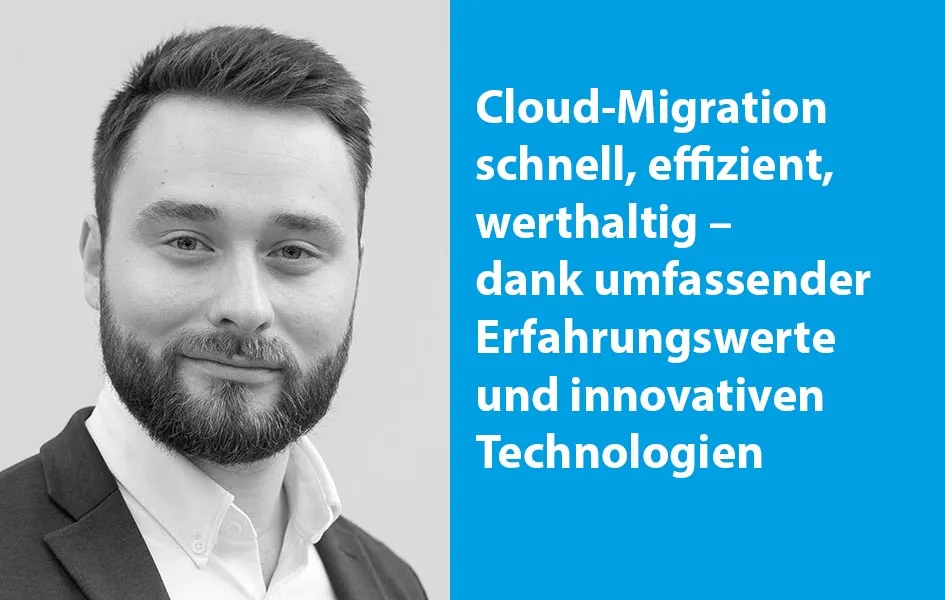
New Relic is the largest and most comprehensive cloud-based observability platform in the industry. It was designed to help customers develop flawless software. The world’s best software and DevOps teams rely on New Relic to work faster, make better decisions, and deliver exceptional digital experiences. More than 50% of the Fortune 100 companies trust New Relic when running software worldwide. In an interview with Julian Weitz, Manager Commercial Sales DACH at New Relic, we discuss monitoring, cloud, migration, transformation, and how to quickly and efficiently implement digitalization initiatives using SaaS solutions.
DIGITAL FUTUREmag: In your conversations with customers, you learn a lot about corporate processes. In your opinion, which are the most important processes in a company that absolutely must be digitalized?
Julian Weitz: Companies should primarily digitalize—and continuously develop—all processes related to customer interaction. As global digitalization accelerates, consumers now have far higher expectations of companies than they did ten years ago—and this trend continues to gain momentum. Over the past few years, start-ups and digital growth companies have set new standards in this area. Almost all successful digital business models of recent years place the customer and their digital product experience at the center. For companies still in the planning stages or at the beginning of their digitalization initiatives, this is where they should prioritize their efforts.
DIGITAL FUTUREmag: Many projects are now being shifted to the cloud using SaaS solutions. What do you see as the greatest benefit?
Julian Weitz: For many companies, the first step delivers concrete added value in the form of significant cost savings, allowing them to refocus on their core business. On-premise software typically comes with expensive service contracts, not to mention hosting costs. In addition, many companies use open-source solutions and internally developed software that they must maintain and continuously develop themselves. All of this not only costs a lot of time and money but also prevents them from expanding and scaling digital business models. Companies that successfully digitalize their business are characterized by a high degree of agility and the ability to dynamically adapt to changing market conditions. Without migrating to the cloud, this is much more difficult—and far more costly.
DIGITAL FUTUREmag: You mentioned migration—a topic that many SMEs shy away from because various processes and existing data structures must be adapted. How do you ensure that existing workflows remain optimally set up in the future?
Julian Weitz: It’s actually quite similar to other major business initiatives: thorough planning, comprehensive expertise, and skilled personnel for implementation are crucial, as is long-term measurability. It’s true that companies sometimes hesitate to migrate to the cloud due to the high technological complexity involved. However, there are numerous SaaS technologies on the market that provide detailed insights into this complexity, resolve it, and simplify matters. This makes every step of a cloud migration—from planning to execution—measurable, preventing negative surprises. Companies can then migrate existing systems to the cloud without compromising performance or even enhance it.
DIGITAL FUTUREmag: New Relic offers a highly comprehensive cloud-based instrumentation platform. Can you tell us more about the toolset?
Julian Weitz: At the core of our SaaS solution is an observability platform that helps companies develop better software and operate their systems more efficiently than ever before. Our customers can address the high complexity of their systems by analyzing them in real time down to the code level and quickly resolving any software issues—directly impacting the customer experience. Our platform captures technical performance data in real time using its own software agents, as well as data from external systems that can be easily integrated. This allows our customers to measure the performance of their entire IT environment in real time, from front-end experience to back-end infrastructure. New Relic applies artificial intelligence to this data, immediately alerting users to issues in their software. Additionally, our platform enables the development of custom user interfaces to more precisely map specific business cases. This allows for much more accurate correlation with technical performance and significantly supports our customers in evolving and scaling their digital business models.
DIGITAL FUTUREmag: What role does monitoring play for your customers in this context?
Julian Weitz: Monitoring plays a crucial role in almost all areas of digital value creation for our customers. Increasingly complex IT structures and new principles such as DevOps have made comprehensive monitoring solutions accessible to all development teams indispensable, enabling decision-making to be guided and adjusted with reliable, comprehensive data. As a result, performance in live operations is permanently enhanced, software can be developed significantly faster and more reliably, and technologies can be successfully and efficiently migrated to the cloud. This reduces the high time investment that development teams have to manage, and thus also the costs for error correction. Even more important, however, are the positive effects of improved technical performance on the customer experience—and thus directly on revenue. Even today, we still see online shops that are not aware that the loading times on their website directly influence their customers' purchasing behavior.
DIGITAL FUTUREmag: Your company’s portfolio also includes Kubernetes and microservices. Can you give us some examples?
Julian Weitz: For companies using microservices on Kubernetes clusters, our platform significantly reduces existing complexity. They can now effortlessly track and analyze specific transactions in detail—from the frontend across numerous microservices and all the way down to pods and containers at the Kubernetes level. The technologies behind this are our Distributed Tracing and Kubernetes Cluster Explorer, which are linked at the transaction level. With Distributed Tracing, transactions running from the frontend across multiple microservices can be centrally analyzed through a single view. From the view of a specific transaction, you can directly access the Kubernetes Cluster Explorer to inspect the performance of the containers, pods, and nodes on which this transaction was executed. While this may sound relatively simple, we are talking about highly complex systems, and only New Relic succeeds in simplifying such environments so that development teams can quickly identify and resolve issues.
DIGITAL FUTUREmag: Many large companies from the Fortune 100 sector rely on New Relic. What is your secret to success?
Julian Weitz: We have committed ourselves to helping companies develop perfect software. IDC industry analysts expect that by 2021, half of the world economy will be digitised. Thirty years ago, digitalisation did not even exist as a concept. There was no internet, no mobile devices as we know them today. Now, however, no less than half of the world economy is in a phase of digital transformation, each with its own unique challenges. To remain competitive today, companies use software as a strategic asset to drive and transform their business. Software is no longer seen as a cost factor that needs to be managed, but quite rightly as the fuel for growth and success in a wide range of industries. Leading companies worldwide confirm to us that they need a platform where they can view and use all their data in real time. From the very beginning, a key part of our goal has been to instrument more of the digital world than any other company. We now need to continue and intensify this work with the future growth of the internet. We want to play a decisive role in defining standards for measuring and improving software and its impact.
DIGITAL FUTUREmag: That was exciting and very informative. Thank you very much for this conversation and the insights into software monitoring and technological possibilities for supporting digitalisation initiatives.
Contact:
New Relic UK ltd
1st Floor Strand Bridge House
138 Strand
WC2R 1HL London
United Kingdom
Tel: +49 800 7243111 (Germany)