Interview with Andreas Zipser, Managing Director Central Europe at Sage
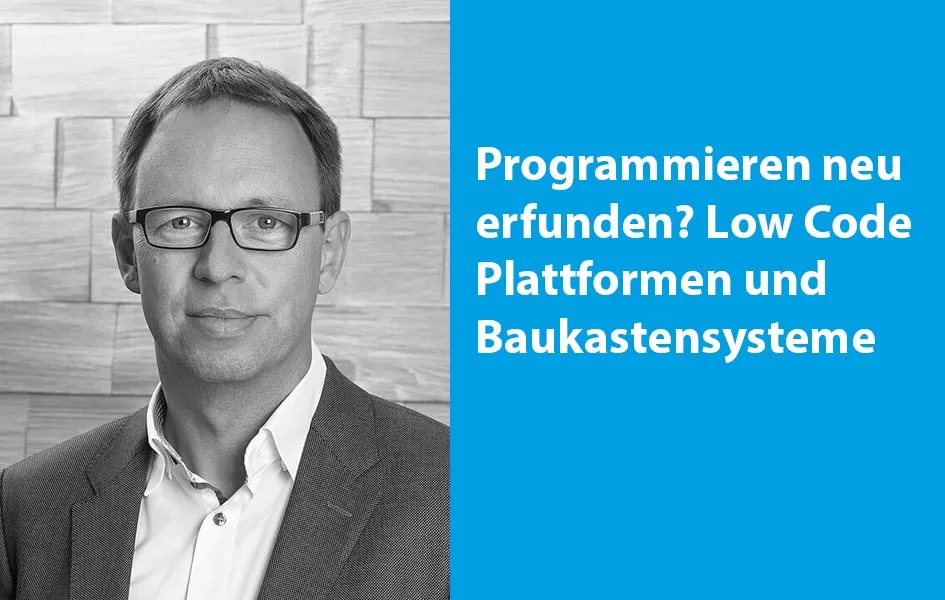
When it comes to accounting, payroll, ERP and HR management systems, SAGE likes to describe itself as a market leader. Starting out as a start-up, the company now employs over 13,000 people, supports millions of customers in 23 countries and continues to go from strength to strength. With Sage Business Cloud, the company equips its customers with tailored cloud solutions as well as desktop solutions and optional cloud services. In an interview with Andreas Zipser, Managing Director Central Europe at Sage, we talk today about the fear in the SME sector of moving their accounting software to the cloud and how medium-sized companies can sensibly plan digital transformation projects.
DIGITAL FUTUREmag: Mr Zipser, according to a recent survey by the digital association Bitkom of 606 companies from different sectors, 56 percent of companies with between 20 and 499 employees describe themselves as digital laggards. At the same time, only 37 percent of SMEs claim to be pioneers of digitalisation. In your opinion, what is the reason for the hesitant progress of German SMEs in terms of digitalisation?
Andreas Zipser: Our experience in this area is somewhat different and largely coincides with a new IDC study that has revealed remarkable insights into the status quo of German SMEs in terms of digitalisation and the use of cloud services: 90 percent have defined a cloud strategy. 68 percent of companies use cloud services and cloud technology to map business processes – including the use of multi-cloud architectures.
This makes it clear: the degree of digitalisation in SMEs is increasing – especially in companies with more than 100 employees. We also see very clearly among our SME customers that trust in the cloud is growing – for two reasons: cloud-based applications are increasingly in demand because many users see the clear advantage of significantly reducing their own IT administration effort. Another reason why our customers are increasingly opting for cloud software is the security of the applications and the data managed with them.
Smaller SMEs, on the other hand, are still somewhat hesitant when it comes to digitalising their processes. Many have reservations about implementing new processes and often the potential of process automation is still too little known. Smaller companies in particular are also put off by the effort required to train their staff to use digital technologies – e.g. AI-based applications. This is precisely where IT companies have the opportunity to provide smaller businesses with easily implementable cloud solutions that give them easy access to digital applications and thus help to overcome reservations.
DIGITAL FUTUREmag: The topic of cloud computing is no longer really news, yet decision-makers still have many reservations about this new technology. What is your company doing to allay these fears?
Andreas Zipser: A key focus for many companies – particularly small and medium-sized enterprises – is the security of applications and the data managed with them. Often, it is precisely these concerns that prevent many companies from taking the step into the cloud with their IT infrastructure. Here, system providers can build trust by offering cloud solutions hosted exclusively in German data centers. After all, these meet the highest security standards, which naturally apply not only to the software itself but also to the data and business processes of users who outsource them to the cloud via a software provider’s systems.
DIGITAL FUTUREmag: Sage advertises that it offers the right solution for German SMEs, whether craftsmen or companies with 1,000 employees. Aren’t you spreading yourself a bit thin here? Do you really have a solution ready for every company size?
Andreas Zipser: Sage is the global market leader for technologies that enable companies of all sizes to manage all resources – from finances to personnel – regardless of whether they are small, medium-sized, or large enterprises. To this end, Sage provides the Sage Business Cloud, which includes everything companies need, such as accounting, finance, enterprise management (ERP), human resources, payroll, and customer management.
We see the Sage Business Cloud as a modular software solution that supports our customers as they develop professionally. This means companies can grow with the software from the Sage Business Cloud and integrate other existing applications in their operations via numerous interfaces. At the same time, cloud-based applications can significantly reduce the administrative workload in internal IT, since the software hosting is entirely the responsibility of the system provider. This gives companies more capacity to focus even more strongly on their core business.
DIGITAL FUTUREmag: For small and medium-sized enterprises, delayed payments can sometimes have serious consequences. This can lead, for example, to liquidity shortages, productivity losses, and growth setbacks. How does Sage support this with modern payment methods?
Andreas Zipser: Especially for SMEs, modern technologies at liquidity-friendly terms are an important success factor to master the challenges of digital transformation, particularly those related to online-based payment options. For this reason, we have integrated the online payment service PayPal into our Sage 50cloud software, for example. This allows startups and small businesses to offer their customers simple and secure invoice payments at favorable terms. Regardless of the type of invoice, payment via PayPal is processed immediately. It is automatically assigned to the correct purchase and posted. This is ensured by an automatic account reconciliation of “Sage Zahlungen Online” with PayPal. With this automated process, companies can shorten their receivables collection periods and simultaneously reduce processing costs when handling incoming payments.
DIGITAL FUTUREmag: For some time now, your company has been offering the Sage 50cloud service. What is new about it, and which current trends in cloud services are being offered here?
Andreas Zipser: In addition to the integration of PayPal, we also offer our customers Pegg with Sage 50cloud—a built-in Smart Assistant that acts as a digital assistant for customer information. This allows decision-makers and field staff to access the information they need for their tasks more quickly while on the go—such as for discount negotiations on new orders. With this, Sage integrates artificial intelligence (AI) and machine learning into commercial software specifically for startups and small businesses. This helps customers reduce administrative effort, solve tasks more quickly, and increase employee productivity. Typical use cases include: travel expense recording, invoice status tracking, reminders for outstanding items, and a faster overview of the company’s current overall balance sheet.
Pegg works similarly to the digital assistants of major cloud providers for the consumer sector. Sage 50cloud users first add Pegg as a contact in their Skype account. They can then access customer information in their commercial software at any time through dialogue with their digital assistant. Using artificial intelligence and continuous development, the solution learns to understand even complex queries during use and guide the user to the desired information as quickly as possible.
DIGITAL FUTUREmag: What concrete steps would you recommend to a medium-sized company to take the right—and above all secure—steps into the cloud?
Andreas Zipser: Companies essentially have two options on their journey to the cloud. Either they decide to migrate their entire IT infrastructure to the cloud in one step. Or they continue using their existing systems and gradually integrate cloud-based services. The outsourcing of business processes and data to the cloud then takes place via on-premise systems that are cloud-connected, i.e., they have interfaces to cloud- and web-based applications. These are existing add-on solutions in the cloud that supplement and expand the functions of the on-premise software. This starts with classic online backup, which is stored in the cloud, and extends to applications such as PayPal, Microsoft Office 365, or Elster, the software for electronic tax returns. This means that even if a company still uses desktop applications, it can already start its gentle entry into the cloud by outsourcing partial processes without having to replace its entire IT infrastructure.
DIGITAL FUTUREmag: On 05.11.2019, you and your company will be attending the Digital FUTUREcongress at Messe Essen. What can customers and visitors look forward to in particular?
Andreas Zipser: We will not only inform our audience about the latest trends in cloud computing, but also about new products and updates that have been released as part of our Sage Business Cloud over the past few months.